Below is a short summary of the steps to follow to become a doctor in the United States of America.
Academically you need to focus your attention on attaining an approved 4-year pre-medical science qualification (step 2):
- Complete Grade 12 / High School diploma / GED — exceptional academic results set the tone for the future!
- You MUST finish a 4-year college or university degree, complying with medical school premed requirements
- In your final year at college/university, you will have to do the MCAT test (Medical School Admission test)
- Apply to medical school. I would suggest that you make use of ‘AMCAS’.
 Which subject should you major in?
For the purpose of admission to medical school, a wide range of majors are allowed – so, please check with the college of your choice if the degree you are intending to follow qualifies as a pre-medical degree.
As a general rule, medical schools are not concerned about whether you major in sciences or not. For example Biochemistry majors, Philosophy majors and Economics majors generally do well.
But medical schools do require that you take certain pre-medical classes as an undergraduate.
The “pre-med” classes required by virtually all schools in the US are as follows:
- “Freshman” chemistry along with the appropriate laboratory courses
- Organic chemistry along with laboratory courses
- Biology along with laboratory courses
- Physics along with laboratory courses
- English
- Calculus including advanced math classes and statistics
In addition, many schools require a certain number of credits in non-science classes. Pre-med requirements play a very important role in admissions for several reasons.
- Pre-med requirements make the bulk of the science classes you will take in college and determine your Science Grade Point Average (GPA), which is one of the determinants of your chances of admission.
- You will need to get recommendations for medical schools from professors who taught pre-med classes.
- Pre-med requirements cover most of the material you need to know for the MCAT. The better you know the stuff covered in these premed classes – the better off you’ll be when the time comes for you to take your MCAT.
- Schools ask you explicitly to list premed requirements along with your grades on their secondary applications, which means they bear a lot of weight.
Build a reputable résumé!
This is most important! You have to distinguish yourself from other applicants – you have to demonstrate to the medical school selection committee that you are serious about becoming a doctor.
- Hospital volunteering
- Shadow a doctor (ask your family doctor, ask family and friends who know doctors)
- Attend premedical Camps (preferably accredited)
- Get additional certifications (BLS, First Aid, Dedicated Premed courses – with accreditation)
- Get involved in research (more information on this soon!)
- Attention to balance (excel in other non-medial areas like art, music, sport etc.)
- Set clear goals
The Rule is the more the better!
Information about MCAT (Medical School Admission Test)
MCAT, along with your grade point average (GPA), is a critical factor that will influence your success in gaining admission to a medical school.
MCAT consists of FOUR Sections:
- A Physical Sciences section, which consists of Physics and Freshman/Introductory (Inorganic) Chemistry questions. (Graded on 1-15 scale)
- A Biological Sciences section, which consists of Biology and Organic Chemistry Questions. (Graded on 1-15 scale)
- A Verbal Reasoning (reading comprehension) section, which consists of passages and questions about them. (Graded on 1-15 scale)
- A Writing Sample Section which consists of Two Essay Questions, half-hour each (not as important as the other three sections, Graded with letters O, P, Q, R, S)
Verbal Reasoning:
This section consists of passages followed by multiple-choice questions. Usually there are nine passages, each half a page long with questions pertaining to the passage following it. The total number of questions in this section is 65, which comes down to about 7 questions per passage on average.
The Sciences:
All questions in both the Biological and Physical sciences sections are multiple-choice. Some questions are factual questions that stand on their own. Other questions test your ability to discern the scientific issues related to a problem. You are given a passage that describes some biological or chemical concept or problem and it is followed by questions.
Biological Sciences
Many questions are not of the type you’ve seen on your exams. They require problem-solving and integration of more than one concept. You can only learn to solve them by practicing:
Do sample exams!
This section consists of two sub-sections:
- Organic Chemistry
The emphasis here is definitely on applied organic chemistry. You will be tested on your skills and understanding to do actual experiments such as purifications, isolations, etc.
Knowing facts is not enough here; you need to learn to integrate them. - Biology
Covers all the topics you can imagine. Hormones and genetics are important. It is helpful to take a class in human physiology in order to prepare for this one or at least read a human physiology book on your own.
The Physical Sciences section also consists of two sub-sections
- Physics
- Chemistry
The American Medical College Application Service (AMCAS) is a non-profit, centralized application processing service for applicants to the first-year entering classes at participating U.S. medical schools.
Prepare financially

Your future studies will be expensive – 4 years Pre-Med and 4 years Medical School all adds up to a lot of money! Consider the following:
- Get information from the specific medical school you intend pursuing your studies at, regarding financial aid/bursaries – and the prerequisites for qualifying for this type of aid
- Save up some money. Consider a part time job
- Approach a wealthy family member or a family member who is a qualified doctor/healthcare professional for some assistance/sponsorship
Becoming a Medical Specialist
To specialize in a specific branch of medicine e.g. anesthesiology, you will have to add another 3-8 years of Internship and residency (average 4 years). During these years you will receive income in the form of a salary from the hospital you are rendering medical services at.
Some comments about medical schools
One of the most competitive areas of education is medical school. Providing attendees with the qualifications and degree that allow graduates to practice medicine in the United States, medical schools are extremely challenging institutions.
Like all areas of schooling, Medical Schools offer many different program types and styles. Teaching style, class size, course relevance, are just some of the many aspects that are different from school to school.
The cost of different Medical School programs also varies. If you are interested in attending a Medical School you will be required to have completed specific course work in your undergraduate field of study.
Applications to Medical School usually involve paying an application fee and then possibly being interviewed. Medical School programs require a large commitment of time and if you are interested in attending, you should thoroughly research the programs you are interested in.
Finding the program that best fits you can be the difference between success and failure in attempting to gain a Medical School degree.
It sounds intimidating, but many others have successfully pursued their dreams and so can you!
All the best with your future!
I really want to become a Doctor – Is there anything I can do straight away?
Indeed yes!
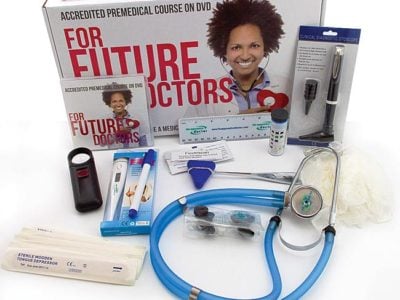
The Apprentice Doctor® Academy has developed and perfected an Online Course for Future Doctors to assist then towards fulfilling their dreams of becoming great medical professionals. The For Future Doctors Foundation Medical Online Course with accompanying Medical Kit has helped launch the career of thousands of want-to-be doctors!
Launch your medical career today!
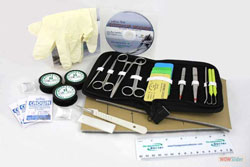
The Apprentice Doctor® Suturing Course and Kit is the resource that will teach you How to Suture Wounds in a couple of hours! If you want to become a Surgeon – why not learn how to suture wounds now?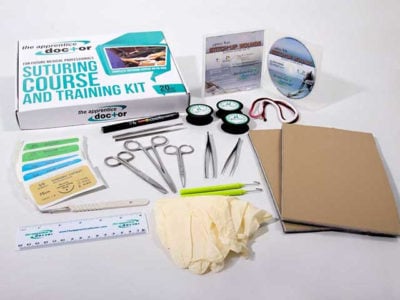
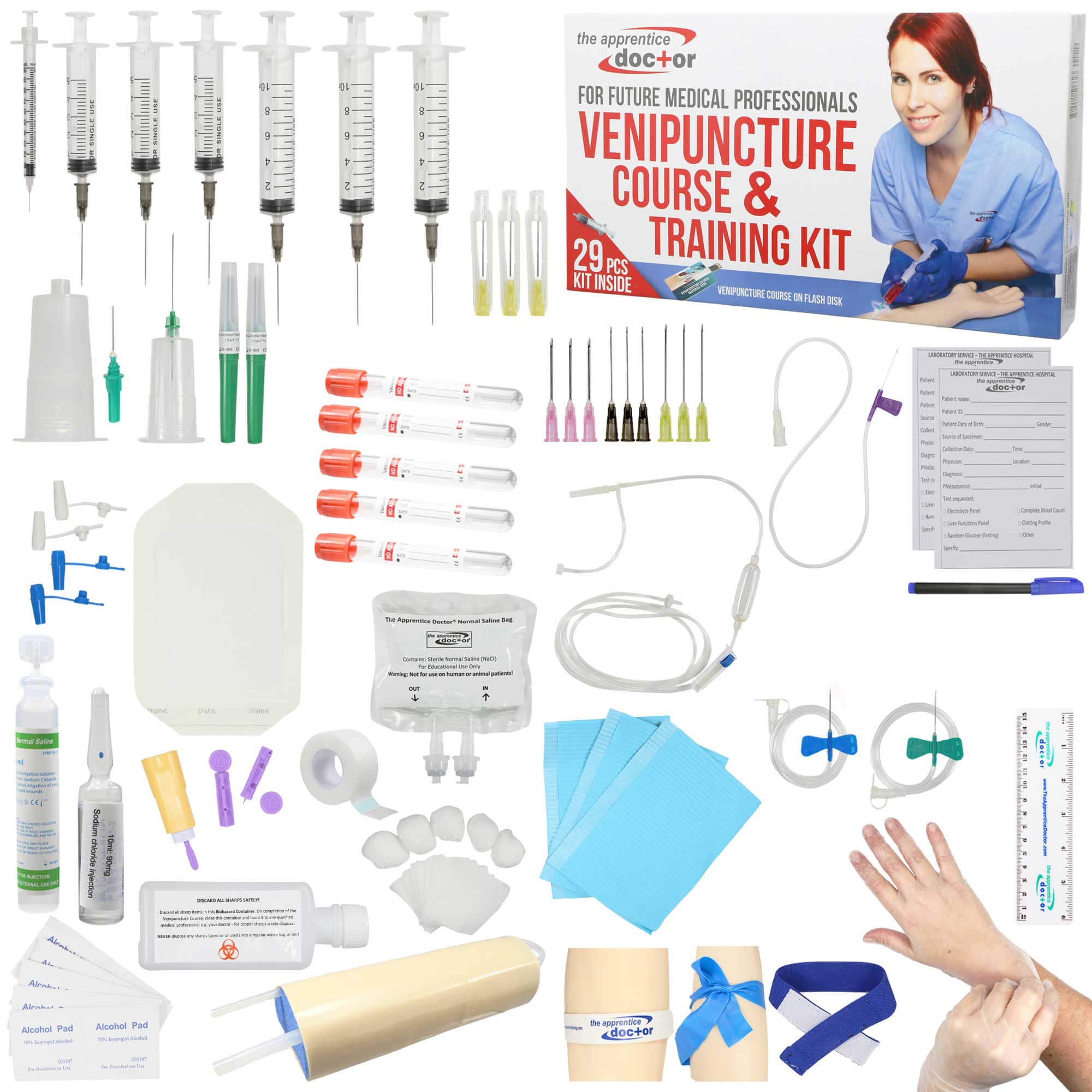
The Apprentice Doctor® Phlebotomy Course and Kit is the resource that will teach you How to confidently perform phlebotomy procedures in a couple of hours! If you want to become a great medical professional – why not learn how perform venipuncture procedures now?
Important note to all aspiring doctors outside of the USA
We get masses of emails of students from India, other pats of Asia and Africa who would like to study medicine in the USA. In short – all countries have as their primary responsibility to assist citizens and their children towards an education – and the USA is the same – they train USA citizens almost exclusively – and only a few med schools will even consider outside applicants – and at a much higher fee (no federal subsidy for foreign students).
Bursaries for foreign students to study medicine in the USA are virtually unavailable.
My advice is – study medicine in the country of your birth – and make a difference there – or pursue emigration to the USA after qualifying as a doctor in your home country – the following websites my help:
https://www.ecfmg.org/contact.html
https://www.faimer.org/
Trust it helps!
KINDLY NOTE: This blog is not here to answer questions on how to get into a USA medical school from outside of the USA – but for USA high schoolers who want to know the basic steps of how it works in the USA.
Dr Anton
|
Dr. Anton Scheepers, BChD, MDent, FFD(SA), MFOS, President of The Apprentice Corporation |